Disclosure: This post was sponsored by North Dakota Tourism. As always, my opinions are my own!
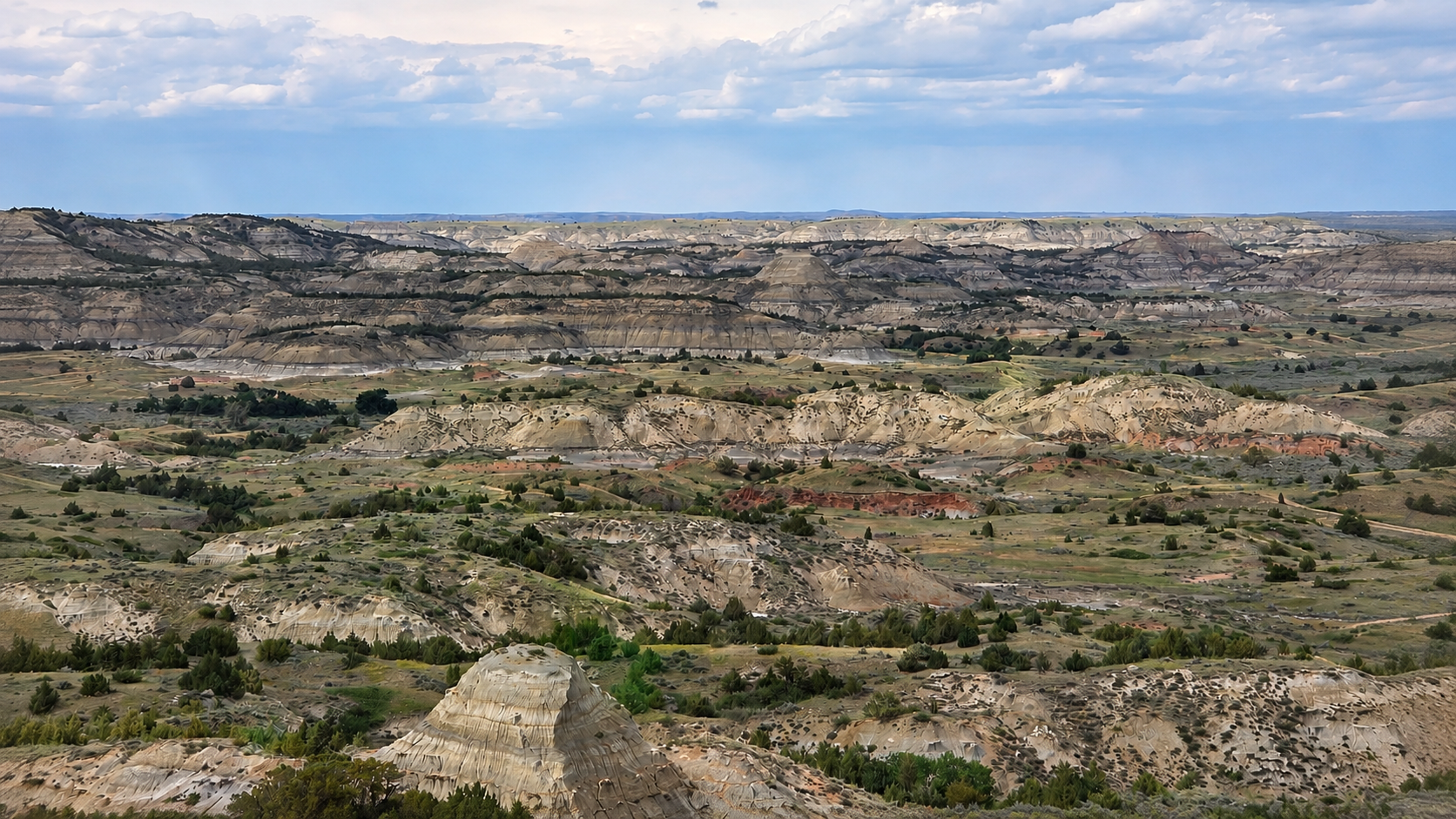
After nearly five years of full-time RV travel, North Dakota was one of the last states left on our map. It didn’t disappoint. From endless prairies to the rolling hills of the Badlands, the state is filled with wide-open landscapes, fascinating history, and unforgettable outdoor adventures.
Heading West
We started in Fargo on the eastern edge of the state, just across the river from Minnesota. You might not expect abundant outdoor recreation in North Dakota’s largest city, but Fargo has a few surprises.
Lindenwood Park sits just a few blocks from the bustle of downtown, offering an easy escape into nature. Set along the Red River, the park is perfect for paddling, fishing, or simply enjoying the waterfront. If you didn’t bring your own gear, the park concessionaire rents kayaks, bikes, and more.
The Red River Trail connects Lindenwood Park with neighboring Moorhead, Minnesota, creating a scenic paved trail that’s ideal for walking or biking.
Another hidden gem is Orchard Glen Park, just a few miles outside downtown. In all of our travels, we’ve never visited another community park quite like it. The public orchard invites visitors to bring a bag and pick their own seasonal fruit. Cherries ripen in July, followed by pears in August, then plums and apples later in the season. It’s a unique experience that perfectly captures the community spirit of Fargo.
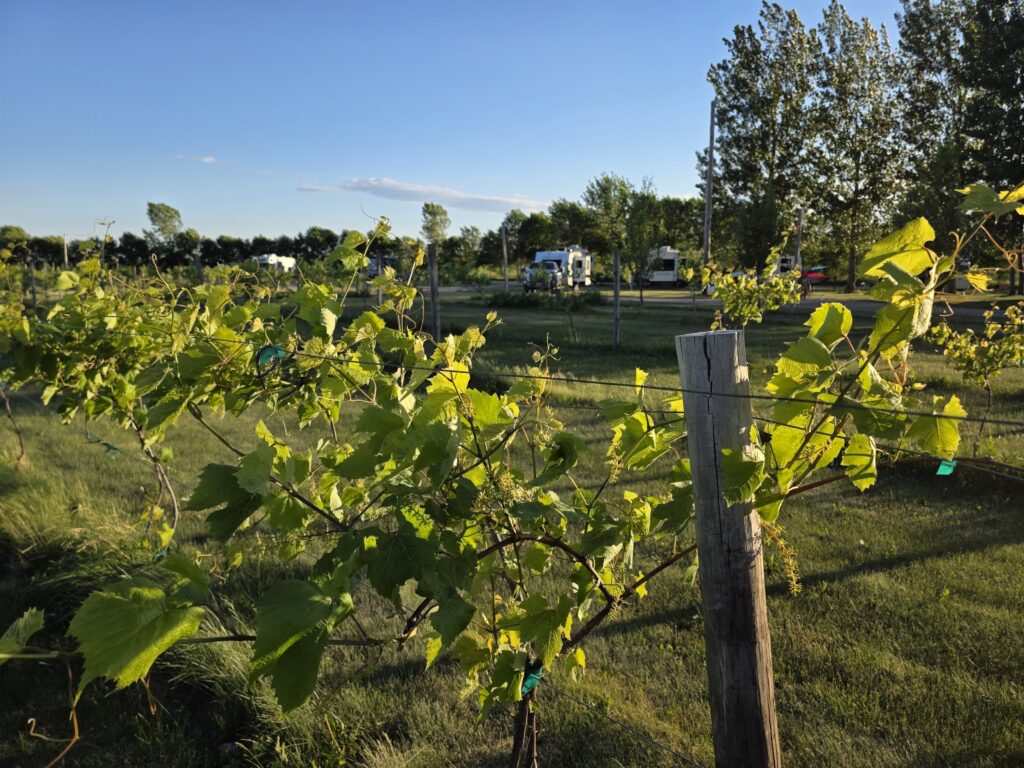
Where to Stay: We split our time between Lindenwood Campground in Fargo and Viking Vines RV Park in nearby Buffalo, about 30 minutes west. Lindenwood provides easy access to downtown and the river, while Viking Vines offers a peaceful retreat surrounded by vineyard views.
Jamestown
Just over 90 miles farther west, we arrived in Jamestown. Just off the interstate, the North American Bison Discovery Center offers a great introduction to one of the West’s most iconic animals. The center is home to a herd of bison, along with a museum and gift shop where visitors can learn about the species’ role in American history and ongoing restoration efforts.
Just steps away, Frontier Village recreates an Old West town and is home to the World’s Largest Buffalo Monument. Standing 26 feet tall, the sculpture has welcomed travelers since 1959. Convenient RV parking at the Bison Discovery Center makes this an easy stop for road trippers.
Jamestown isn’t just about history. With more than 35 miles of trails, it’s also a fantastic place to get outdoors. We spent an afternoon at the Jamestown Reservoir—and who knew you could enjoy a beach day in North Dakota?
Where to Stay: Jamestown Campground is located just a few miles outside town. Spacious sites, an on-site store, scenic walking trails, and some of the friendliest campground owners we’ve met made this one of our favorite stops.
Bismarck
An easy drive of just over 100 miles brings you to Bismarck and neighboring Mandan, located on opposite sides of the Missouri River. While both cities offer plenty of dining options, we spent our time exploring Fort Abraham Lincoln State Park.
North Dakota’s first state park offers an impressive blend of history and outdoor recreation. History enthusiasts can tour General Custer’s reconstructed home—said to be haunted—along with the former commissary, now a bookstore and coffee shop, and the military barracks. This was Custer’s final home before the Battle of the Little Bighorn.
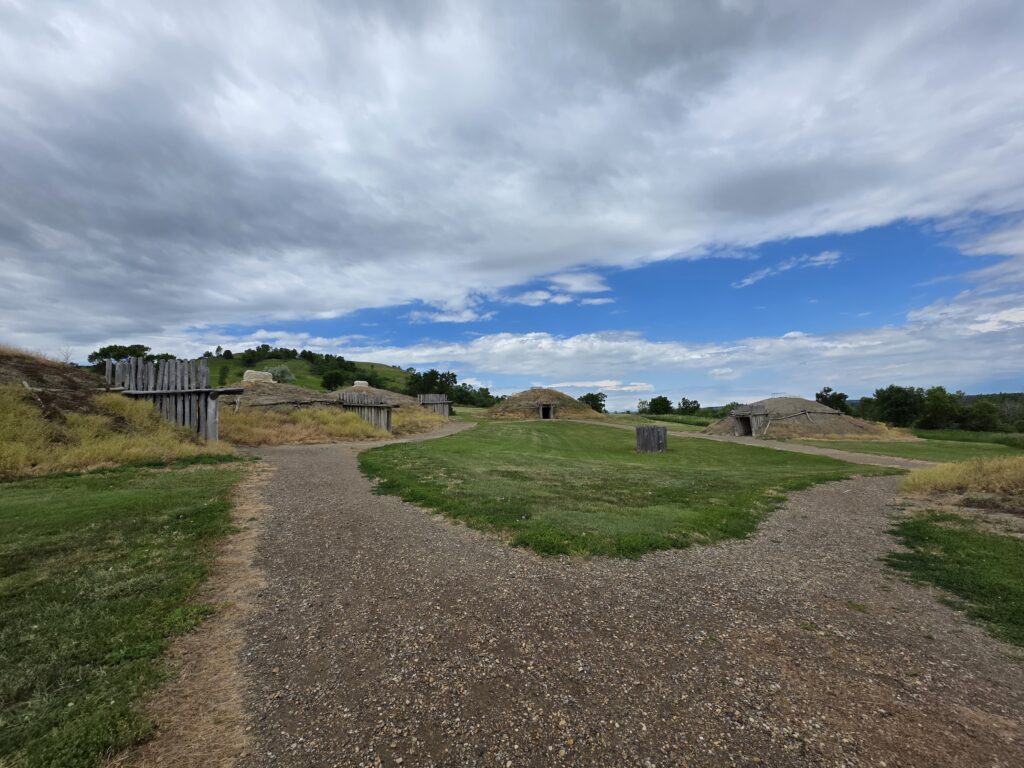
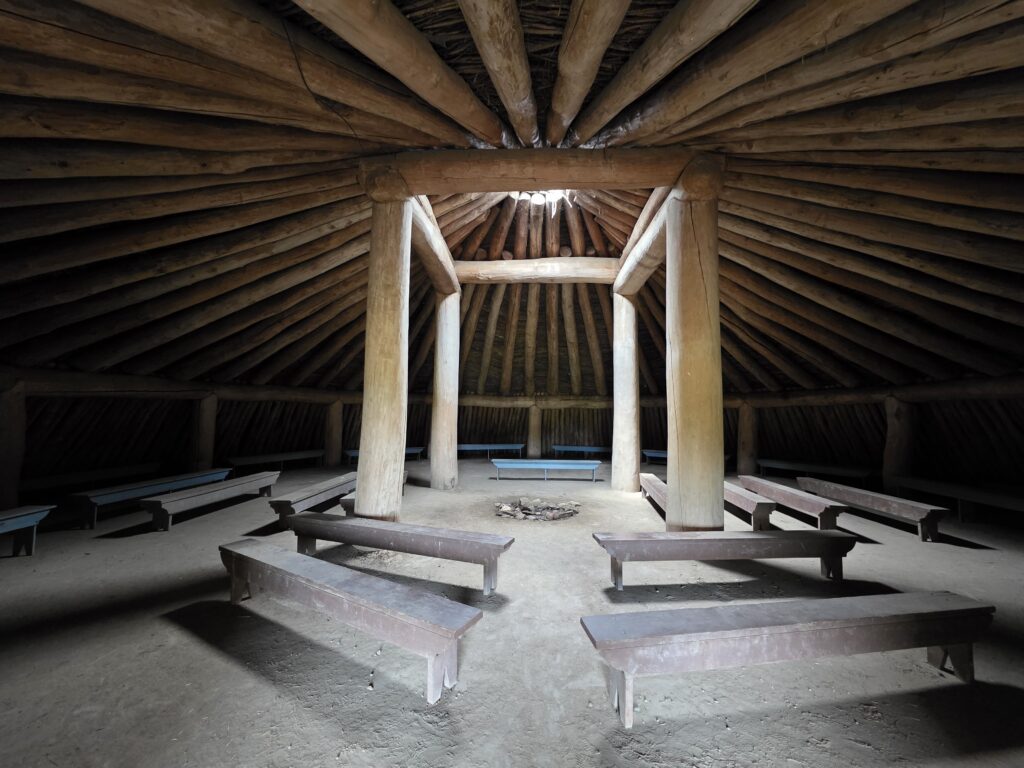
Adjacent to the visitor center is the reconstructed On-A-Slant Village, featuring traditional Indigenous earth lodges. The museum does an excellent job sharing the story of the Mandan people who once called this area home. The village was reconstructed by the Civilian Conservation Corps (CCC) in the 1930s under the guidance of Scattered Corn, the first female Corn Priestess of the Mandan.
The park also features several excellent hiking trails. Little Soldier Loop, just 1.7 miles long, rewards hikers with sweeping views of the Missouri River, the surrounding bluffs, and the Bismarck skyline. Continue on to the military blockhouses for even higher viewpoints—they’re also one of the best places in the area to watch the sunset.
Where to Stay: Fort Abraham Lincoln State Park Campground is peaceful and beautifully situated, with spacious, private campsites—some just steps from the river. While the campground doesn’t offer full hookups, most RV site includes water and 30/50-amp electric service, with a convenient dump station near the exit.
Enchanted Highway
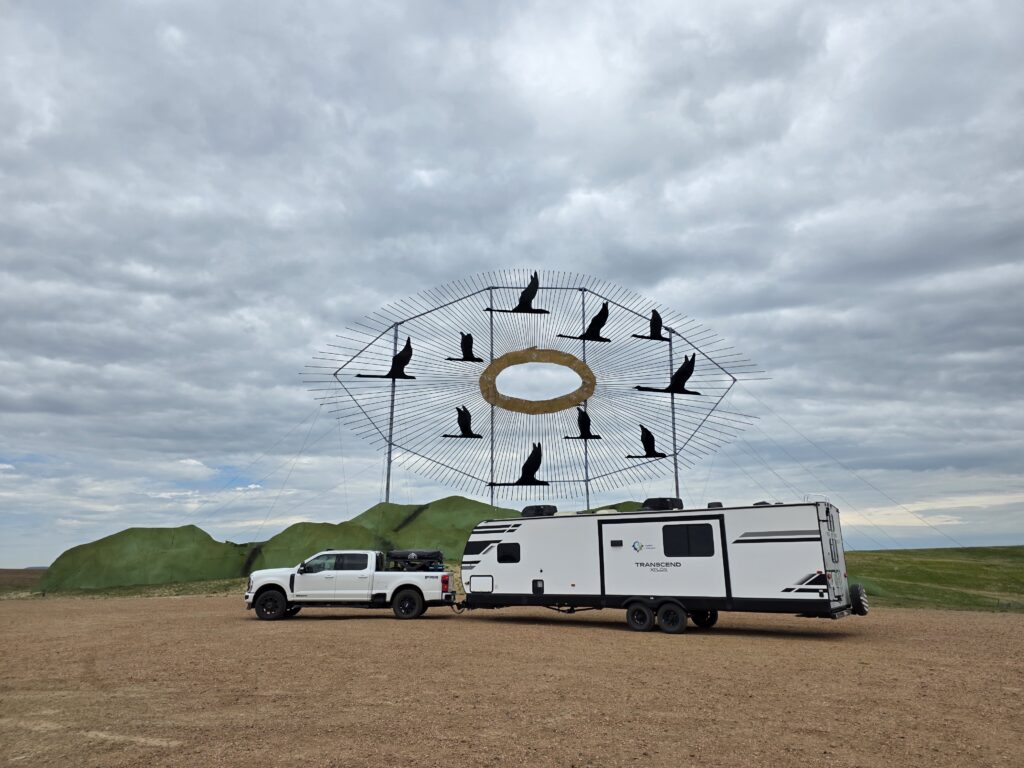
No North Dakota road trip is complete without driving the Enchanted Highway. Stretching 35 miles south from Exit 72 on I-94 to Regent, this scenic route features a series of enormous metal sculptures, including several Guinness World Record-holding installations. The first, Geese in Flight, stands just off the interstate, while the drive concludes in Regent at the Enchanted Castle Hotel and the Knight and Dragon sculpture.
Medora & Theodore Roosevelt National Park
If North Dakota has a crown jewel, it’s Theodore Roosevelt National Park.
The park is divided into two primary units, North and South, with Medora serving as the gateway to the South Unit. We’ve visited few towns that capture the spirit of the American West as well as Medora.
The town is full of charm, from its historic hotels and lively main street to its live music, scenic trails, and two standout attractions: the Medora Musical and the new Theodore Roosevelt Presidential Library.
We were fortunate to visit the library on a press trip just days before its grand opening. While it beautifully tells Theodore Roosevelt’s story and his conservation legacy, it also embraces modern technology with interactive, AI-powered exhibits. I can’t emphasize enough how impressive this presidential library is—you simply have to experience it for yourself.
Perched atop the same bluff, the Medora Musical is another must-see. This year’s production feels especially patriotic as America celebrates its 250th anniversary, but regardless of the season, it’s a world-class performance featuring talented musicians, dancers, and entertainers that audiences of every age will enjoy.
Now for my favorite part—the national park itself.
Theodore Roosevelt National Park welcomes around 600,000 visitors each year, far fewer than many of the West’s better-known national parks.
South Unit
Begin your visit in the South Unit, whose entrance sits just outside Medora. The highlight is the 35-mile Scenic Loop Drive, winding through colorful badlands, sweeping prairie, and some of the park’s best wildlife viewing. Bison, wild horses, prairie dogs, and deer are common sights along the route.
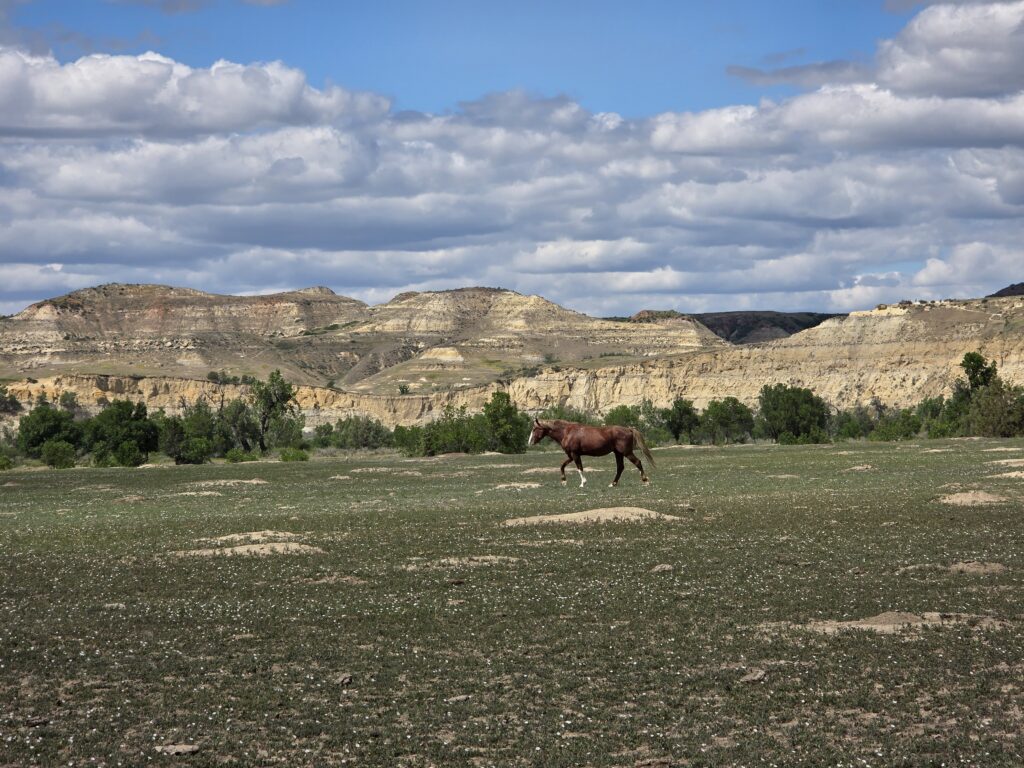
We especially enjoyed the Coal Vein Trail, a short loop of less than a mile featuring dramatic staircases, expansive views, and one of the better areas to spot wild horses.
Beautiful any time of day, Wind Canyon offers spectacular overlooks after just a short walk. Sunset is especially memorable, when the canyon glows with warm light and great horned owls often emerge to begin their evening hunt.
The South Unit also includes two incredible areas that aren’t accessible from the Scenic Loop.
Painted Canyon, located a few miles east of Medora, has its own visitor center and several trails. The one-mile Painted Canyon Nature Trail is deceptively challenging, especially during the heat of summer, so be sure to bring water. The steep sections are well worth the effort, providing an up-close look at the colorful badlands formations.
Even farther away lies one of the park’s most overlooked treasures: the Petrified Forest.
Having visited Petrified Forest National Park in Arizona, we were surprised to find this area even more impressive. The trailhead can be tricky to locate, so follow the national park’s directions rather than relying on your GPS.
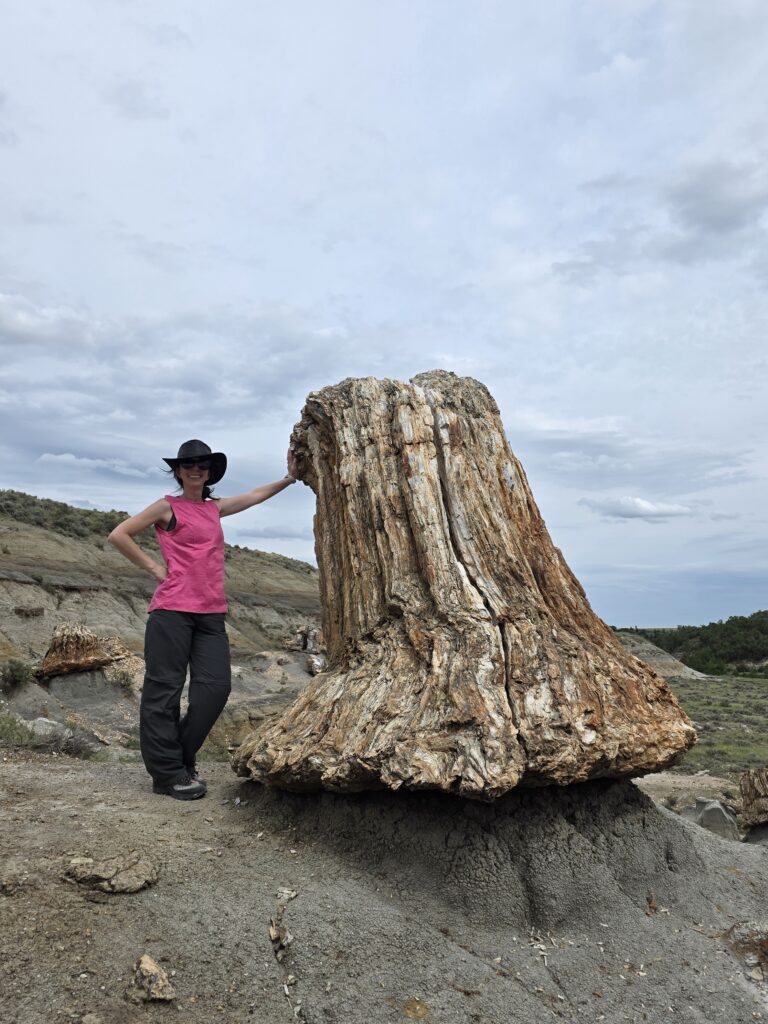
From the trailhead, it’s about 1.5 miles in either direction to reach the first petrified logs, or hikers can complete the entire 10.5-mile loop. Theodore Roosevelt National Park is home to the third-largest petrified forest in the United States. What surprised us most wasn’t the number of petrified logs—it was their sheer size.
Heading left from the trailhead leads to some of the largest specimens, including one towering more than six feet above the ground. Bison also frequent this area, so stay alert and give wildlife plenty of space.
North Unit
Located about 50 miles north of I-94, the North Unit deserves at least a day trip. It’s quieter and more rugged than the South Unit, offering dramatic landscapes and a true sense of solitude.
Drive the 28-mile Scenic Drive, stopping at overlooks and trailheads along the way.
Don’t miss the Cannonball Concretions, unusual spherical rock formations found just off the road. Another favorite is Prairie Dog Town along the Buckhorn Trail. Park at the Caprock Coulee Trailhead and hike roughly a mile to reach the colony. Prairie dogs scatter the area all around the trail, and some of their burrows extend right into the path, so watch your step.
At the end of the Scenic Drive, Oxbow Overlook offers one of the most breathtaking views in the entire park.
Where to Stay: For full hookups, Medora Campground is ideally located just steps from downtown and the South Unit entrance. If you’re looking for a more secluded experience, Grasslands Boondocking near Exit 23 offers free camping on public land with spectacular views and incredible stargazing. Just be prepared for a rough access road.
North Dakota exceeded every expectation we had. Between its welcoming small towns, fascinating history, dramatic Badlands, and surprisingly diverse outdoor adventures, it’s a destination that deserves far more attention than it receives. Whether you’re planning a summer road trip or traveling full-time by RV, don’t make the mistake of driving past this remarkable state.